
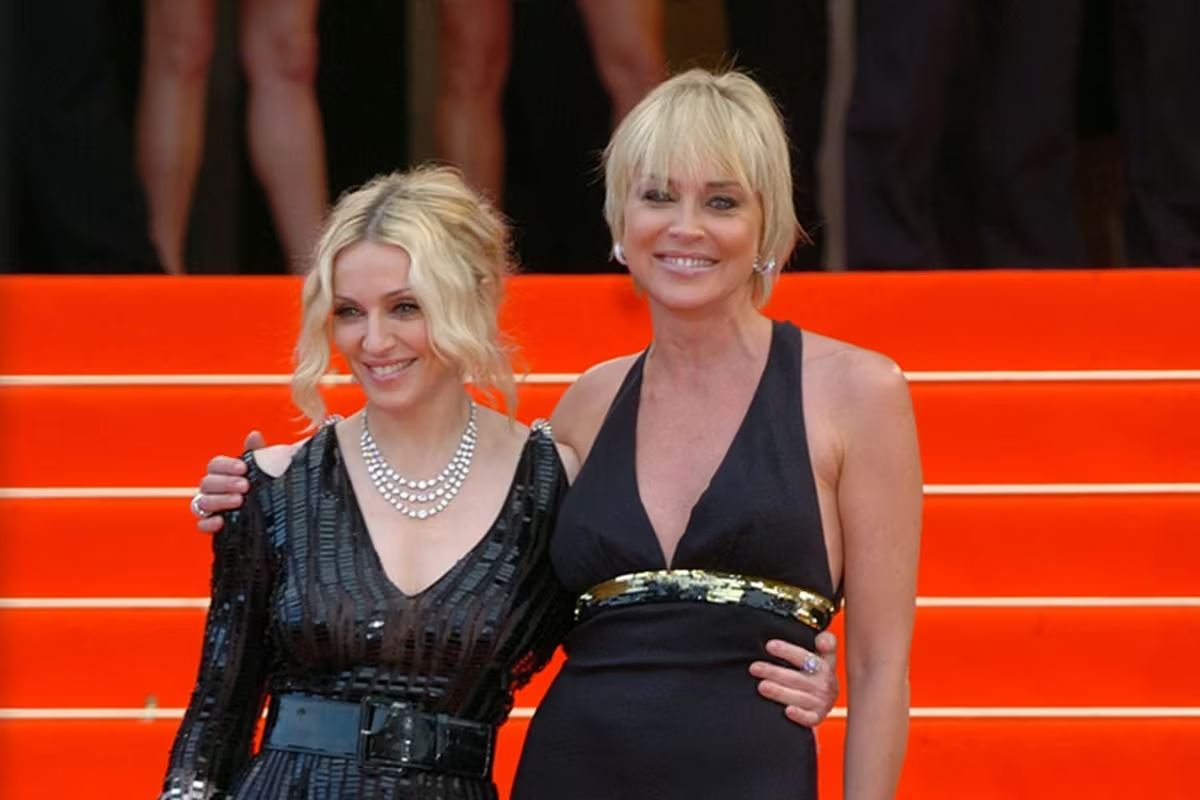
The flash of paparazzi bulbs, the roar of a stadium, the limelight, the global recognition. For most, this is the pinnacle of success. Yet, for an increasing number of celebrities who have already achieved this zenith, another world beckons—one of quiet studios, blank canvases, and raw materials. From Brad Pitt’s debut as a sculptor with a show of his works at the Sara Hildén Art Museum in Finland in 2022, to the paintings of Sylvester Stallone, Lucy Liu, and Jim Carrey, the pivot from global icon to budding artist is a well-trodden path.
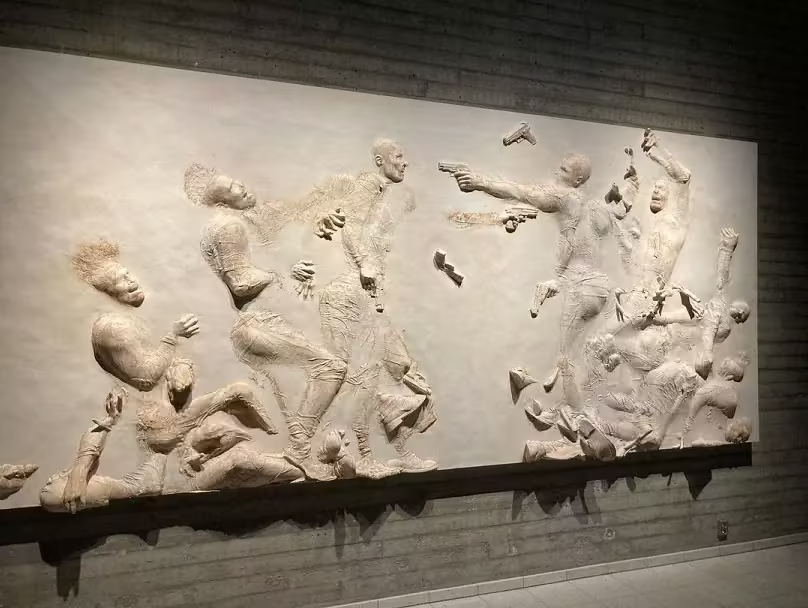
But why? When you already have fame, fortune, and a platform most people can only dream of, why risk failure and ridicule by stepping into the notoriously critical and insular art world?
The answer is complex, but it boils down to a simple truth: the fame they have is often not the fulfillment they seek. The celebrity “brand” is a public-facing construct, meticulously managed and often controlled by others. Visual art, in stark contrast, offers something fame cannot: a different kind of voice, a tangible legacy, and, perhaps most importantly, complete personal control.
Below are some of the reasons these celebrities pivot to the world of painting, drawing and molding;
1. The Quest for Control and Authenticity
A celebrity’s life is rarely their own. An actor is a vessel for a director’s vision and a screenwriter’s words. A pop star is often the face of a sound engineered by a team of producers and songwriters, their image crafted by stylists and PR agents. They are a product, a “brand” confined by audience expectations and multi-million dollar contracts.
In the studio, there is no script, no director, and no marketing team. The artist is the sole creator, the autonomous force.
- No Commercial Compromise: While a celebrity’s art can be commercial, the creation of it is not. It doesn’t need to pass a focus group or guarantee a box-office opening weekend. It is an act of pure, uncompromised self-expression.
- Direct Expression: The relationship between the artist and the canvas (or the clay, or the metal) is direct and unfiltered. Every brushstroke, every weld, every choice is their own.
- Rebelling Against the “Mask”: For performers like Jim Carrey, whose public persona was built on an elastic, comedic “mask,” painting became a way to process his inner life and express thoughts on spirituality and existence that didn’t fit into his Hollywood box.
“If I could say it in words there would be no reason to paint.”
Edward Hopper
2. A New Language for a Different Story
Celebrities are often typecast. An action hero is expected to be tough; a comedian is expected to be funny. Their medium restricts the stories they can tell.
Art offers a different, more nuanced vocabulary. It allows them to explore themes and emotions that their day job doesn’t.
- Beyond Words: For actors who have mastered language, the non-verbal, abstract nature of painting or sculpture can be liberating. It allows for the expression of feelings that are too complex or personal for words.
- Exploring Identity: Actress Lucy Liu has been a practicing artist for decades, long before her Charlie’s Angels fame. Her work, which often includes found objects and explores themes of sexuality and identity, allows her to engage in a conversation that her acting roles may not.
- Processing Trauma and Life: After his partner’s death, Brad Pitt famously spent time in a sculpture studio, working with clay and other materials. His recent work, which debuted alongside pieces by musician Nick Cave, is a raw exploration of self-reflection and personal failure. It is a story he could arguably never tell in a blockbuster film.
3. The Therapeutic Sanctuary
The life of a celebrity is a high-pressure, 24/7 performance. It is a world of constant observation, judgment, and noise. The studio, by contrast, is a sanctuary.
- A Meditative Escape: The act of creating art is often a mindful, meditative practice. It requires focus, patience, and presence. It is a way to silence the external noise and connect with an internal, quiet space.
- A “Safe” Place: Sylvester Stallone, who has been painting for over 50 years, has called the studio his “safe place.” He describes painting as a form of therapy, a way to channel the aggression and emotions from his “Rambo” and “Rocky” personas into something tangible and beautiful.
- Processing the Chaos: For many, art is not a performance but a private diary. It’s a way to process the disorienting nature of fame, to make sense of a life lived in the public eye.
4. Building a Tangible, Permanent Legacy
Film is ephemeral. Music is streamed. A performance exists in the moment it is consumed. Fame itself is fickle and can fade.
A painting or a sculpture is a physical object.
This drive for a tangible legacy is a powerful motivator. A piece of art exists independently of its creator. It can be touched, hung in a gallery, sold at auction, and passed down through generations. It is a permanent, physical footprint in the world.
Legendary musician Bob Dylan has long pursued visual art, from painting to large-scale ironwork sculptures. His music is his primary legacy, but his sculptures are a different kind of mark—physical, heavy, and undeniably present in the world, separate from his musical persona.
5. The Challenge of a New Mountain
What do you do when you’ve already won the Oscar, the Grammy, or the global box office? For many high-achievers, the answer is to find a new, harder mountain to climb.
The art world is notoriously difficult to break into and is deeply skeptical of outsiders, especially celebrities. This presents a unique challenge:
- Seeking “Pure” Validation: Earning respect as an artist is a different kind of validation than earning applause as a performer. It’s a validation of their taste, their intellect, and their technical skill, not just their charisma.
- Overcoming the “Dilettante” Label: Celebrities who enter the art world face immediate criticism. They are often dismissed as “hobbyists” or “dilettantes,” and their work is judged (often unfairly) against the backdrop of their fame.
- The Seduction of Mastery: To be taken seriously, they must demonstrate genuine skill and a unique vision. The challenge of mastering a completely new craft—learning to draw, to sculpt, to mix colors—is a powerful driver for people who have already reached the top of their first profession.
There you have it. For most celebrities, becoming an artist is about reclaiming the narrative, controlling the product, and speaking in a voice that is entirely, authentically their own. Fame is a performance for the world; art is a conversation with the self. And for those who have spent a lifetime in the spotlight, the allure of that private, honest conversation is a temptation too powerful to resist.








Leave a Reply