
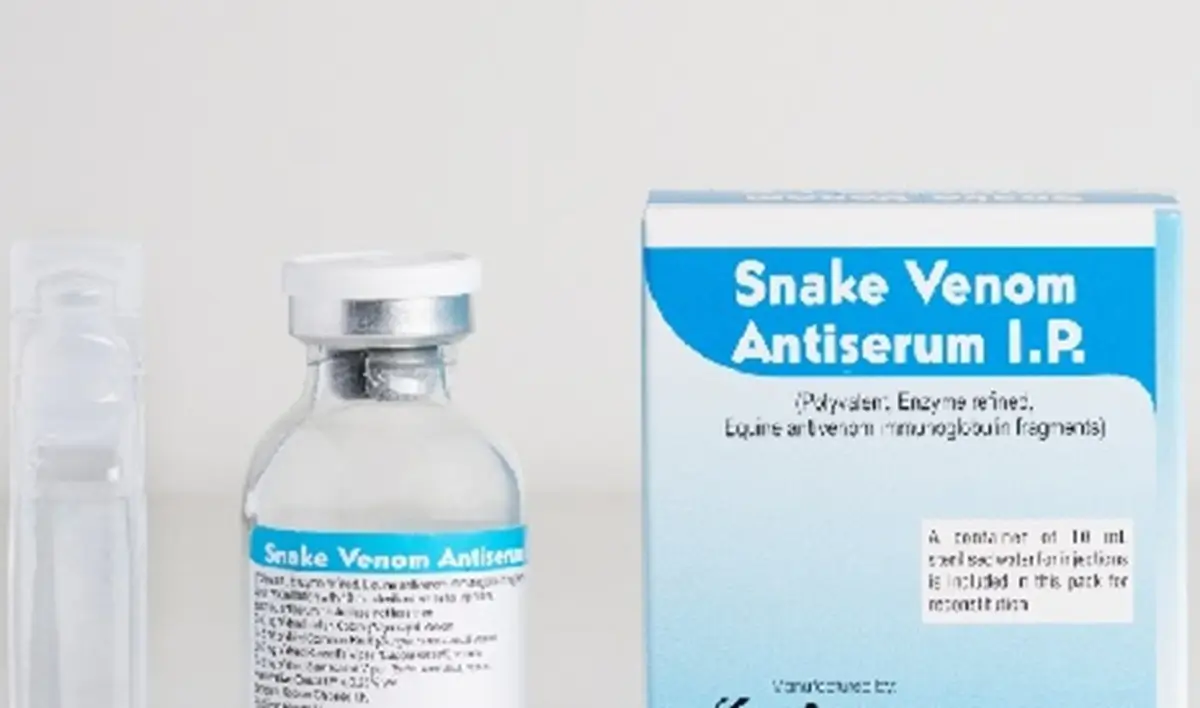
Antivenoms are medications specially formulated to suppress the deadly effects of venoms in snakebite victims. Also known as antivenin, venom antiserum, and antivenom immunoglobulin, these purified antibodies against venom components are obtained by harvesting and then purifying the antibodies from plasma produced by the donor animal.
Nigeria, along with most other African countries do not have a local antivenom production.

Although not having a local production for antivenom, this does not excuse Nigeria, the supposed “giant of Africa” from having a sufficient supply of the medication that is needed in a country with a considerable population of venomous snakes.
Following the tragic death of a “super-talented vocalist”, Ifunanya, many experts, especially healthcare practitioners, have disclosed the reason why most hospitals in Nigeria lack antivenom in their stocks.
Ifunanya, a young and vibrant Nigerian singer, according to reports, took herself to two different hospitals after she was bitten by a snake but both denied her treatment because they do not have the required anti-venom. This eventually led to her death.

How Much Is Antivenom in Nigeria?
Antivenoms in Nigeria, as of 2026, according to different online sources, cost up to N100,000, and a snakebite victim “might need like 5-10 for starters (might be up to 20 vials needed)”. This means that to treat a snakebite, victims will need to spend between N500,000 and N1 million on treatment and over N2 million in severe cases.
A check by LanreNews at an online pharmacy store reveals the price to be N193,500 and N180,600 (on promo).

Another online store quoted the price at N393,300.

Why Antivenom Is Scarce in Nigerian Hospitals
A popular medical doctor, The_Bearded_Dr_Sina (@the_beardedsina), has explained why anti-venoms are not readily available in Nigerian hospitals.
He narrated, “These anti venoms apart from being expensive need to be stored by a functional cold chain system powered by constant electricity. No hospital or pharmacy will want to stock a drug they know isn’t in high demand, heat liable put in millions, and then gets wasted, leading to losses in millions when they barely have 24/7 electricity.
“If we will have antivenoms available, we need to pressure our government to give us light. We institute protocols for a cold chain system. I see no reason why every government facility can’t be given a waiver for 24/7 electricity. Makes no sense.
“Then we can talk about subsidisation and public and private partnership, to ensure it is readily available. And by the way, there are lot of fake Anti venoms, so we also need a regulation agency.”
What to Do When Bitten by a Snake
A popular Twitter account known for their interested and knowledge on animals has shared tips on what to do if bitten by a snake. According to a post by Arojinle (@arojinle1), snakebite victims should do these seven (7) things:
- Move away from the snake carefully so you don’t get bitten again. Try to see if you can get a description of the snake while moving away. This is helpful.
- Even though this is very difficult to do, you must not panic. Panic makes your heart beat faster, which can spread venom more quickly if it’s venomous. Sit or lie down in a comfortable position. Try to keep the bitten area at or slightly below heart level (don’t raise it high).
- Remove anything tight near the bite.
- Only try to drive or move yourself to the hospital if you’ve exhausted all other options. Your best bet is to call someone who can come and take you. This is to ensure that you keep physical activities at a minimal level. Don’t try to start running after the snake, too. All these will increase your heartbeat and spread the venom faster.
- While waiting for the person you called, clean the bite gently with soap and water.
- Immobilize the bitten area. Keep the limb as still as possible.
- Get to a hospital as quickly and safely as possible. This is the most important step. Don’t wait to see if symptoms get worse. Even if you feel okay at first, serious problems can start hours later.
Here Are What You Should Not Do
- Don’t use a tourniquet (tight band or string to stop blood flow). It can cause more tissue damage.
- Don’t cut the bite or try to suck out venom. This can cause infection or more harm.
- Don’t apply ice or cold packs. It doesn’t help and may damage tissue.
- Don’t drink alcohol or caffeine. They can speed up how your body reacts.
- Don’t take painkillers unless your doctor prescribes them. Some painkillers can increase bleeding.












Leave a Reply